
How to Build KPI Accountability Across Global Teams
Nov 15, 2025KPI accountability is not punishment — it’s ownership, context, and rituals.
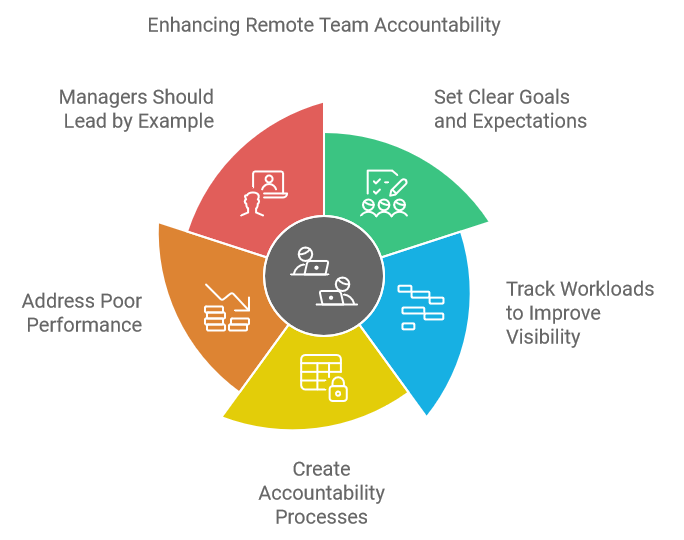
Accountability is often confused with blame. Real accountability empowers teams to own outcomes and gives them the context and tools to improve. For global teams, accountability requires three concrete enablers: visibility, ownership, and local rituals.
1. Visibility: one source of truth Multiple reports, multiple numbers — confusion follows. Create one dashboard per KPI (or per KPI family), and make it visible to everyone. A single-number summary with drill-down links reduces argument and focuses conversation.
2. Ownership: assign a clear owner Every KPI needs a named owner, responsible for monitoring, investigating dips, and proposing corrective actions. Ownership assigns decision-making rights and reduces “finger-pointing.”
3. Local rituals, global standards Global teams need consistent standards but local rituals. Require the same SOPs and definitions globally, but let teams adopt daily or weekly rituals that fit their timezone and culture — e.g., morning huddle in India, midday sync in LATAM.
4. Small, meaningful targets Quarterly goals are useful, but people need weekly or daily targets to adjust. Use a simple “health” indicator for each KPI: green/amber/red with one suggested action for amber/red states.
5. Rapid root cause and experiment cycles When a KPI dips, run a quick RCA and a rapid experiment — a 7–14 day change-and-measure cycle. Small, fast experiments beat long analyses.
6. Reward the action, not the excuse Celebrate the team that reduced rework by 10% via a small process change. Rewarding initiative encourages ownership more than penalising missed targets.
7. Use dashboards as coaching tools Dashboards should be conversation starters, not scorecards that hide context. Train managers to use dashboard insights in 10-minute coaching touchpoints.
Accountability at scale doesn’t require heroic leaders; it requires small rituals, clear owners, visible metrics, and an expectation that teams will run experiments. With those building blocks, global KPI ownership becomes repeatable and trustworthy.